

Transaction flow
The following diagram shows the transaction flow for a closed-loop transaction: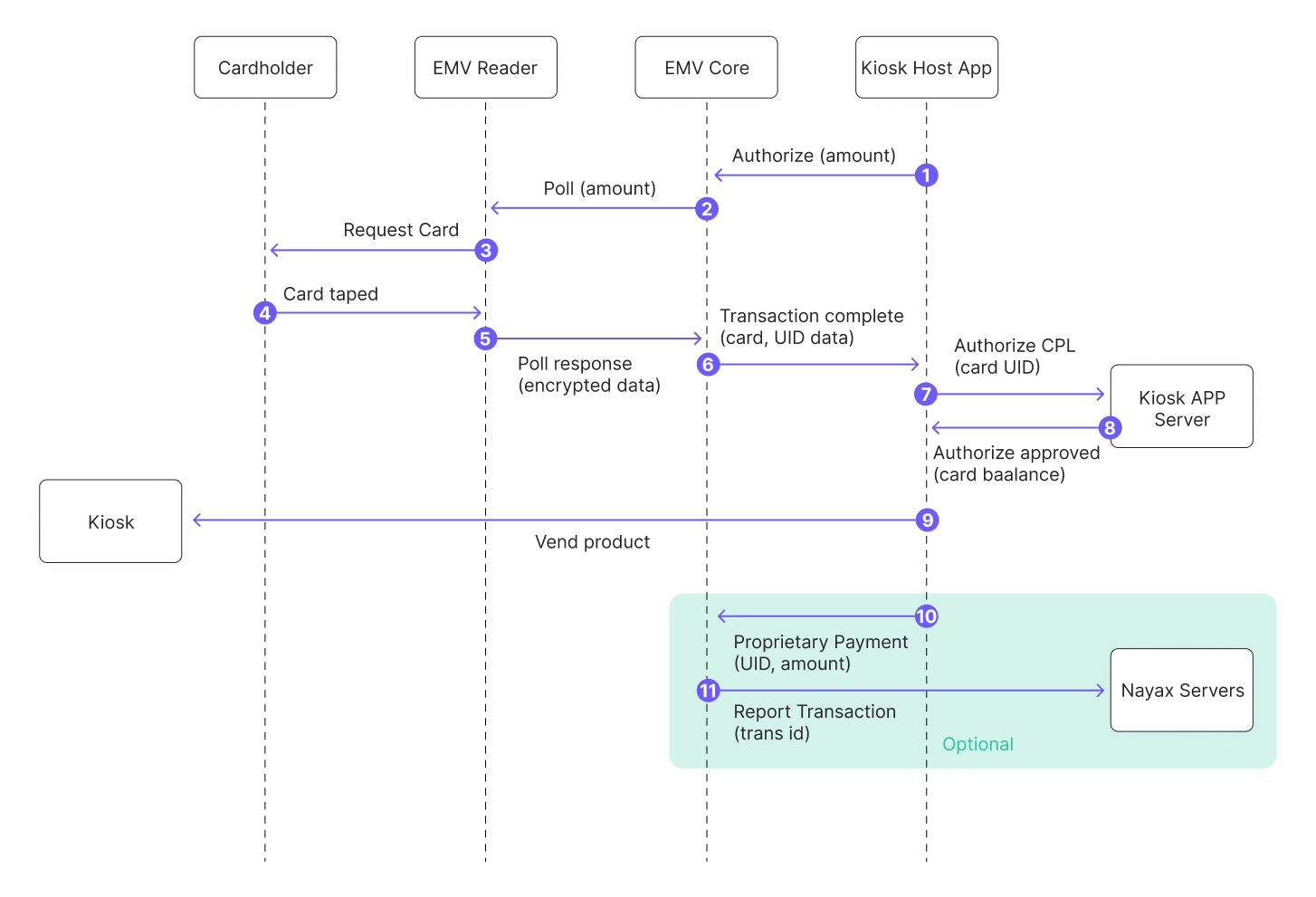
- The host machine calls the
PreAuthorizemethod using the EMV Core API. This is the only action performed by the host machine. - The EMV Core sends the amount to the Reader.
- Your application prompts the user to tap their card.
- The shopper taps the card into the EMV reader.
- The Nayax EMV Reader pulls the Response with the encrypted card data to the Nayax EMV Core.
- Nayax EMV Core identifies it as a MIFARE card (closed-loop transaction) and informs the host application that the transaction is complete, returning the card UID and optional card data.
By default, MIFARE card data is shared locally with your host machine. You can also configure the SDK to send the data to Nayax servers for processing through Nayax Prepaid.
- Your application uses the card UID to authorize the transaction with your application server.
- Once approved, the transaction is complete.
- The product is successfully delivered to the buyer.
- EMV Core allows transactions to be reported to the Nayax server, which sends the proprietary payment amount and UUID.